
Terrazzo vs Marble: Which Is Better for Furniture?
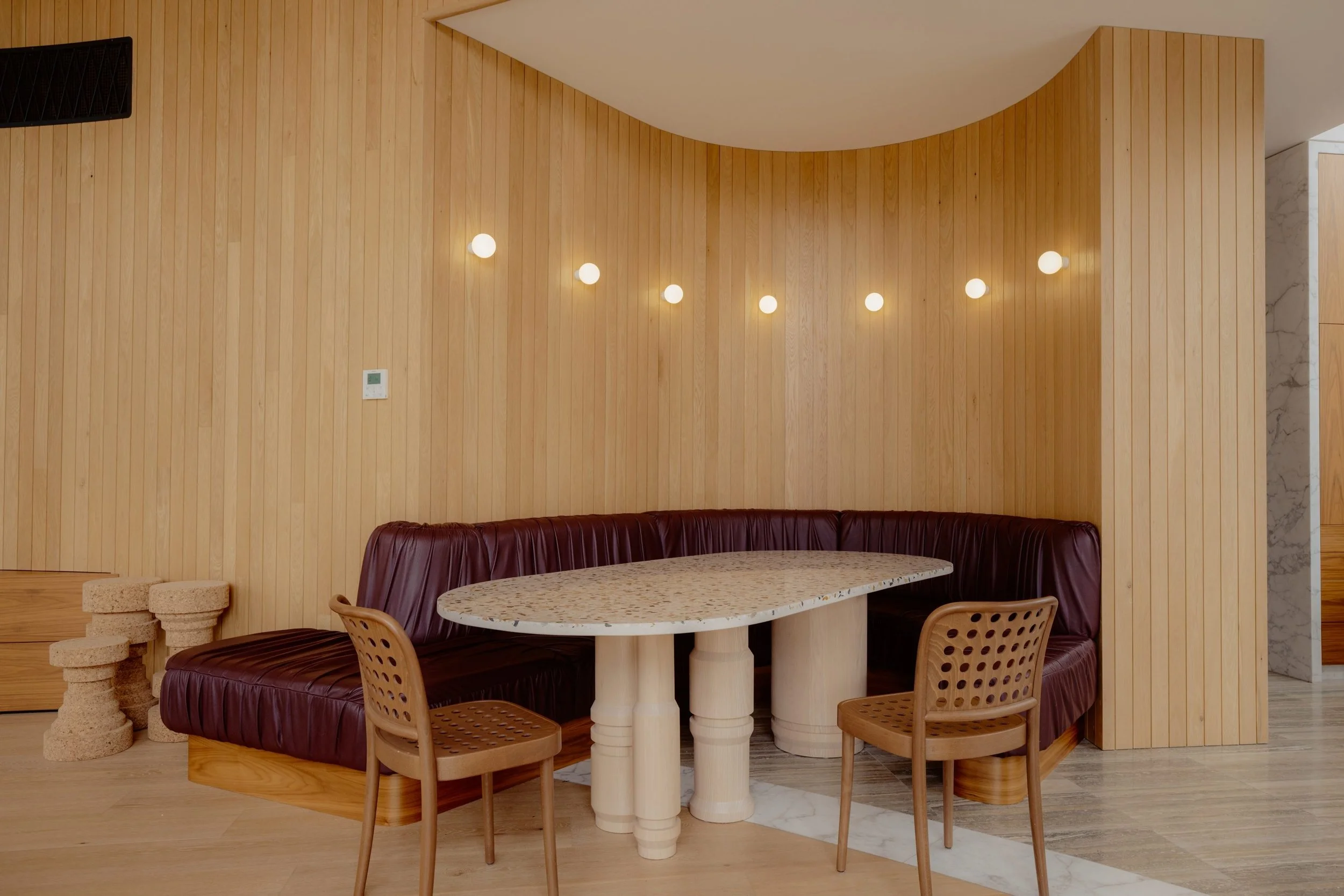
Marble and terrazzo sit at opposite ends of the same idea. Both are stone-based, both are beautiful, and both make a serious statement in a room. But they're made differently, they behave differently, and they suit different people for different reasons. If you're trying to decide between the two for a dining table, bench-top, coffee table, or any other piece of furniture, this is a straightforward comparison of what each material actually offers.
What Is Marble?
Marble is a natural stone formed when limestone is subjected to extreme heat and pressure deep within the earth. What you get is a material that nature made entirely on its own. The veining, the colouring, and the pattern are all the product of geological processes that happened millions of years ago. That's part of its appeal. No two slabs are identical. The variation is real and unrepeatable, and for many people, that's exactly what they want. Marble has been used in architecture and furniture for thousands of years, and its association with quality and permanence is genuinely earned.
The trade-off is that you're working with what exists. You can choose from what's been quarried: Carrara white, Nero Marquina black, Verde Guatemala green, but you cannot change the veining, the pattern, or the proportions of colour. You select from nature's range, not your own.
What Is Terrazzo?
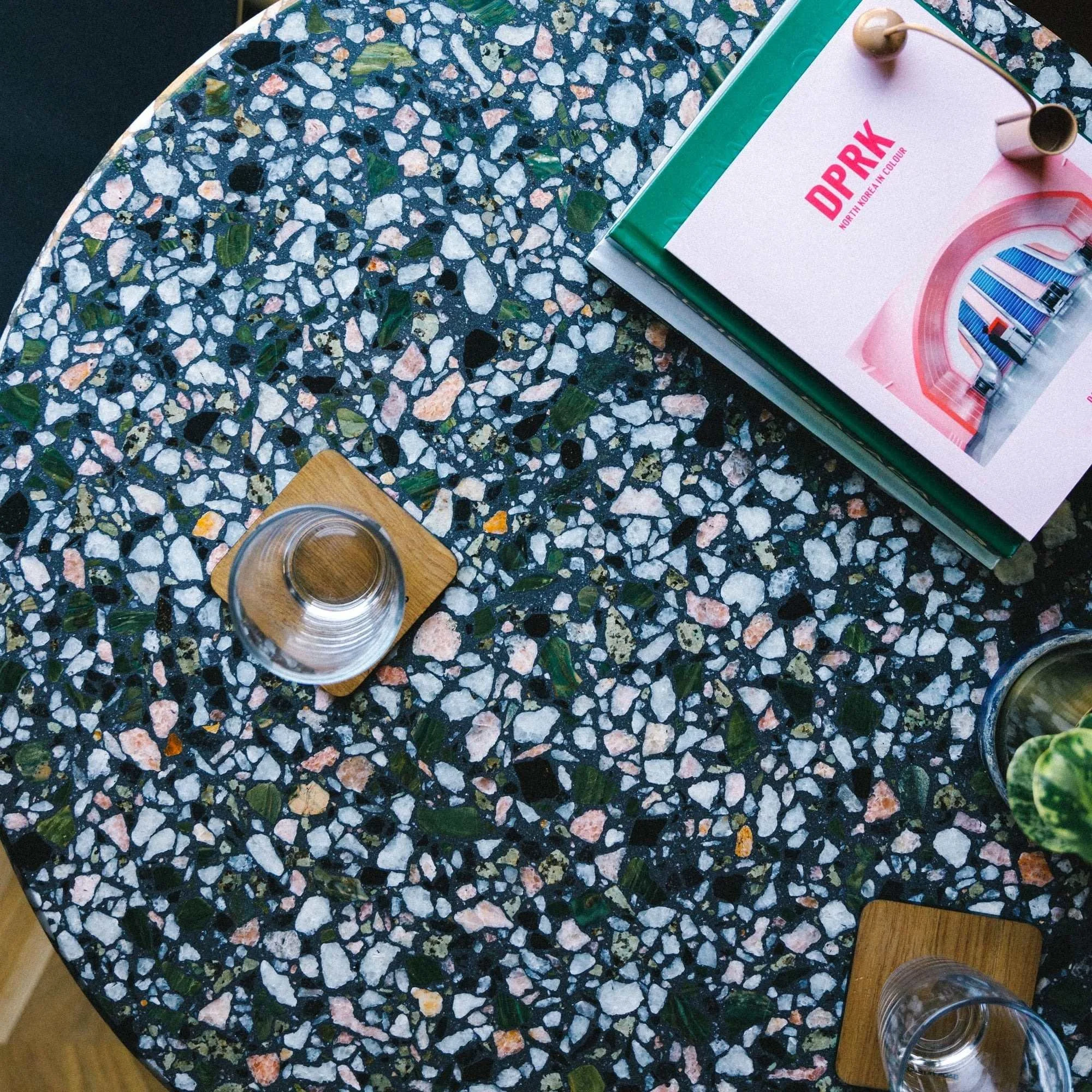
Terrazzo is a composite material: chips of aggregate, marble, granite, glass, quartz, or other materials set into a cement or resin matrix, then cast, ground back, and polished to reveal the surface. The aggregate is the visual element; the matrix is what holds it together. The key difference from marble is that terrazzo is made, not found. Every element of a terrazzo piece is chosen: the type and size of the aggregate, the colour of the matrix, the ratio of chip to background, and the finish. You can produce virtually any colour, any pattern, any combination. There is no existing slab to work within; the piece is built from scratch around a brief. That means two things. First, terrazzo is inherently customisable in a way marble simply isn't. Second, every bespoke terrazzo piece is one of a kind, not because nature made it that way, but because you designed it that way.
How They Compare
Customisation: This is where the two materials diverge most clearly. With marble, you're choosing from what's available in the market; a range of natural stones in a variety of colours and veining patterns. The choice is genuinely beautiful, but it's a selection exercise, not a design one. With terrazzo, you're designing from zero. The colour of the matrix, the aggregate type, the chip size, the density of the pattern, all of it is variable. If you need a piece that matches a specific paint colour, echoes a fabric, or fits into a colour palette that doesn't exist in nature, terrazzo can get you there. Marble can't.
Durability: Both materials are extremely durable when properly made and maintained. Marble has been used in buildings for millennia and holds up exceptionally well. Terrazzo has a similarly impressive track record — there are terrazzo floors from ancient Rome that are still intact. For furniture specifically, terrazzo has a slight practical edge. Marble is vulnerable to etching from acidic substances — citrus, wine, coffee — which can dull the surface permanently if not treated quickly. Terrazzo, depending on the matrix and sealer used, tends to be more forgiving. Neither is indestructible, but terrazzo is generally considered the lower-maintenance option for surfaces that see regular use.
Maintenance: Both materials are porous without a sealer and benefit from regular resealing. Day-to-day, both are easy to clean with mild soap and water. The main practical difference is marble's sensitivity to acids — even a splash of lemon juice left to sit can leave a permanent etch mark on a polished marble surface. Terrazzo is less reactive, which matters if the piece is in a kitchen or dining room.
Aesthetics: This is genuinely a matter of preference, not a category where one material wins. Marble has a classic elegance — the veining, the depth, the association with tradition and luxury. It suits interiors that lean toward timeless and restrained. Terrazzo has a different kind of presence. It can be bold or subtle, graphic or textural. It carries personality in a way that marble, for all its beauty, doesn't — the speckled, varied surface has a warmth and approachability that suits contemporary Australian interiors particularly well. It's a material that feels at home in colour-forward, design-conscious spaces, and it ages in an interesting way rather than simply patinating. Neither is objectively better. They express different things.
Sustainability: Marble is quarried, it's extracted from the earth, processed, and shipped, often from Italy, Spain, or Turkey. The environmental footprint of quality marble can be significant. Terrazzo can incorporate recycled aggregate — reclaimed glass, salvaged stone, industrial by-products — and when made locally, the supply chain is considerably shorter. Mortadello's terrazzo is made in Melbourne, which means the transport footprint is a fraction of imported stone.
Cost: High-quality marble and bespoke terrazzo sit in a similar price bracket for furniture. Very fine marble — particularly large, bookmatched slabs with exceptional veining — can be more expensive. Bespoke terrazzo is priced according to the complexity of the piece and the materials used. Neither is a budget material, and nor should they be: both are made to last decades.
Which Is Right for You?
Choose marble if you want the natural variation and classical elegance that only quarried stone provides, you're drawn to a specific marble variety that suits your space, and you're happy to work within the range nature offers.
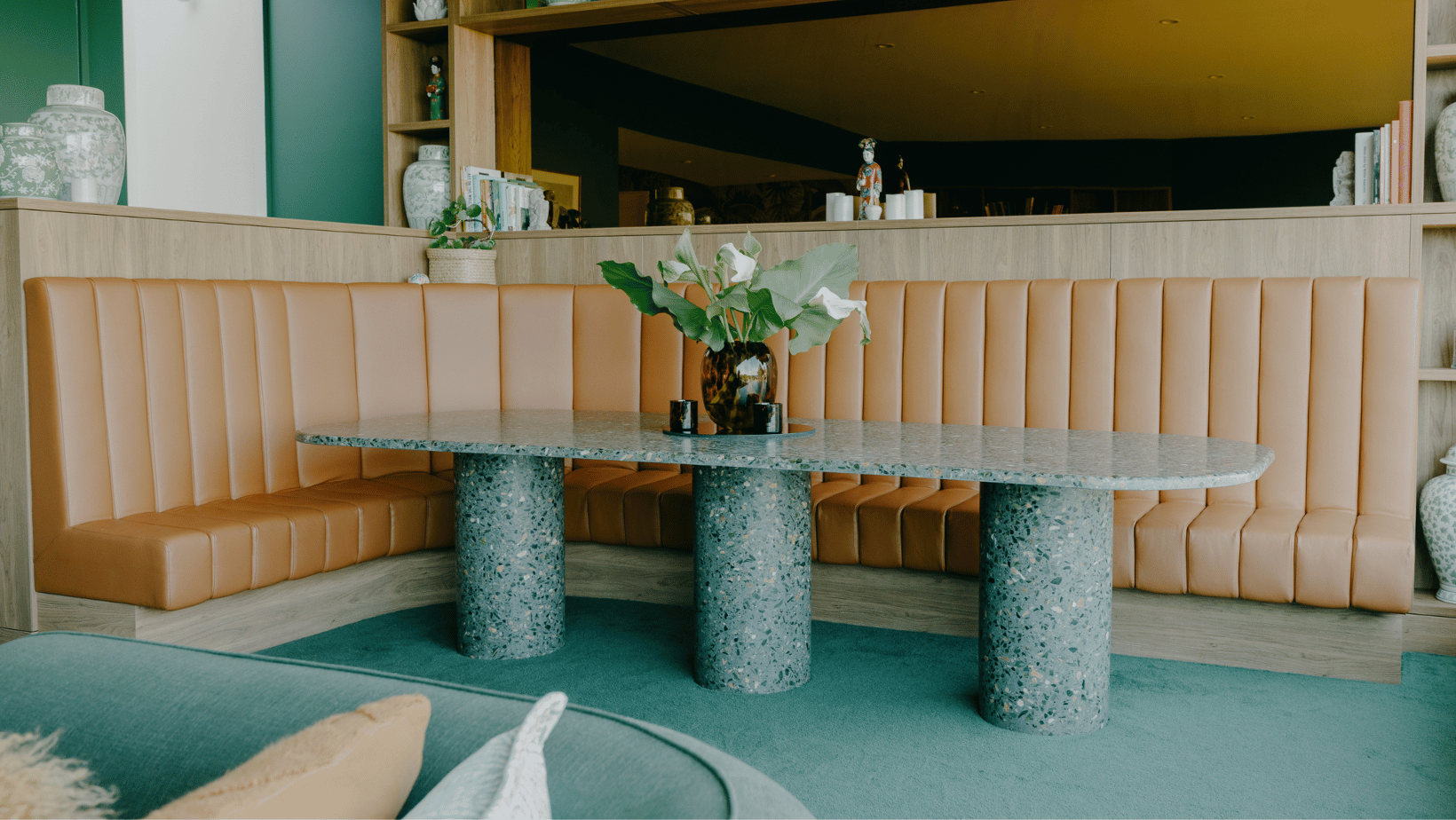
Choose terrazzo if you want a piece that's designed specifically for your space — in a colour, pattern, and form that doesn't exist off the shelf. If customisation matters, if you're working to a specific design brief, or if you want something that reflects a particular aesthetic that marble can't quite reach, terrazzo is the stronger choice.
For most people working with an interior designer or architect, or anyone who has a clear vision of what they want a piece to look like, terrazzo offers a level of creative control that marble simply cannot match.
Bespoke Terrazzo at Mortadello
At Mortadello, every piece is designed from scratch in our Melbourne studio. If you have a design brief, a colour palette, or even just an idea of what you're after, we can develop a terrazzo piece around it — from the aggregate selection through to the final polish. We make dining tables, coffee tables, benchtops, stools, bedside tables, splashbacks, and more. Everything is customisable, everything is made in Melbourne, and no two pieces are alike. Explore our work or get in touch to start a conversation about your piece.
Frequently Asked Questions
Is terrazzo more durable than marble? Both are highly durable materials with centuries of use behind them. For furniture that sees regular use, dining tables, benchtops, coffee tables, terrazzo is generally considered more forgiving because it's less vulnerable to acid etching from food and drink. Marble is equally strong but requires more care around spills.
Is terrazzo cheaper than marble? They sit in a similar price range for furniture. The cost of each depends on the quality and complexity of the piece. Very fine marble can be more expensive than bespoke terrazzo; conversely, a highly complex terrazzo commission may cost more than a straightforward marble table. The best way to compare is to get a quote for each specific piece.
Do marble and terrazzo work well together in the same space? Yes, and it's a combination that works particularly well in Australian interiors. The veining and softness of marble pair naturally with the speckled texture of terrazzo; they share the same stone-based language without competing. A common approach is marble for a splashback or wall surface alongside a terrazzo benchtop or dining table. The key is keeping the colour palette cohesive so the two materials feel considered rather than accidental.
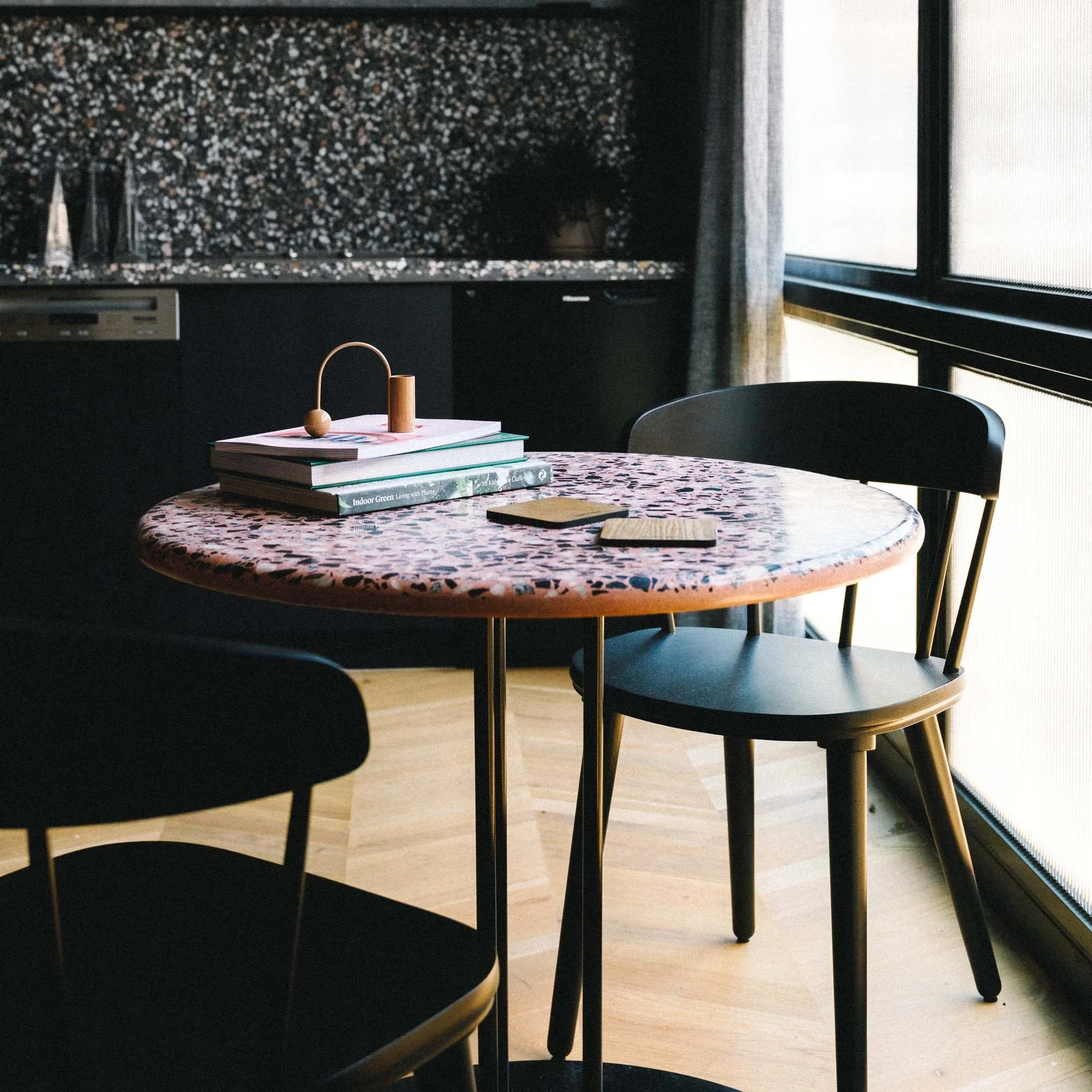
Which is better for a dining table: terrazzo or marble? Both make excellent dining tables. Terrazzo has a practical edge because it's less sensitive to acidic spills, which is a real consideration for a dining surface. Aesthetically, the choice comes down to the look you're after and whether you want a standard or fully custom piece.
Do terrazzo and marble stain easily? Both materials are porous without a sealer, so both require sealing, and the same basic rule applies to each: clean up spills promptly and reseal every few years. The practical difference is that marble is also vulnerable to etching: acidic substances like citrus, wine, and coffee can dull or mark the surface permanently, even on a sealed piece. Terrazzo doesn't have the same sensitivity to acids, which makes it a more forgiving option for surfaces that see daily use. Sealed and maintained properly, both materials are hardwearing, terrazzo just requires a little less vigilance around the dinner table.
Mortadello Terrazzo is a Melbourne-based studio making bespoke terrazzo furniture, surfaces, and architectural elements from scratch. Every piece is designed around your brief. View our shop or contact us to discuss a custom piece.