
Can Terrazzo Be Repaired? A Guide to Terrazzo Restoration.
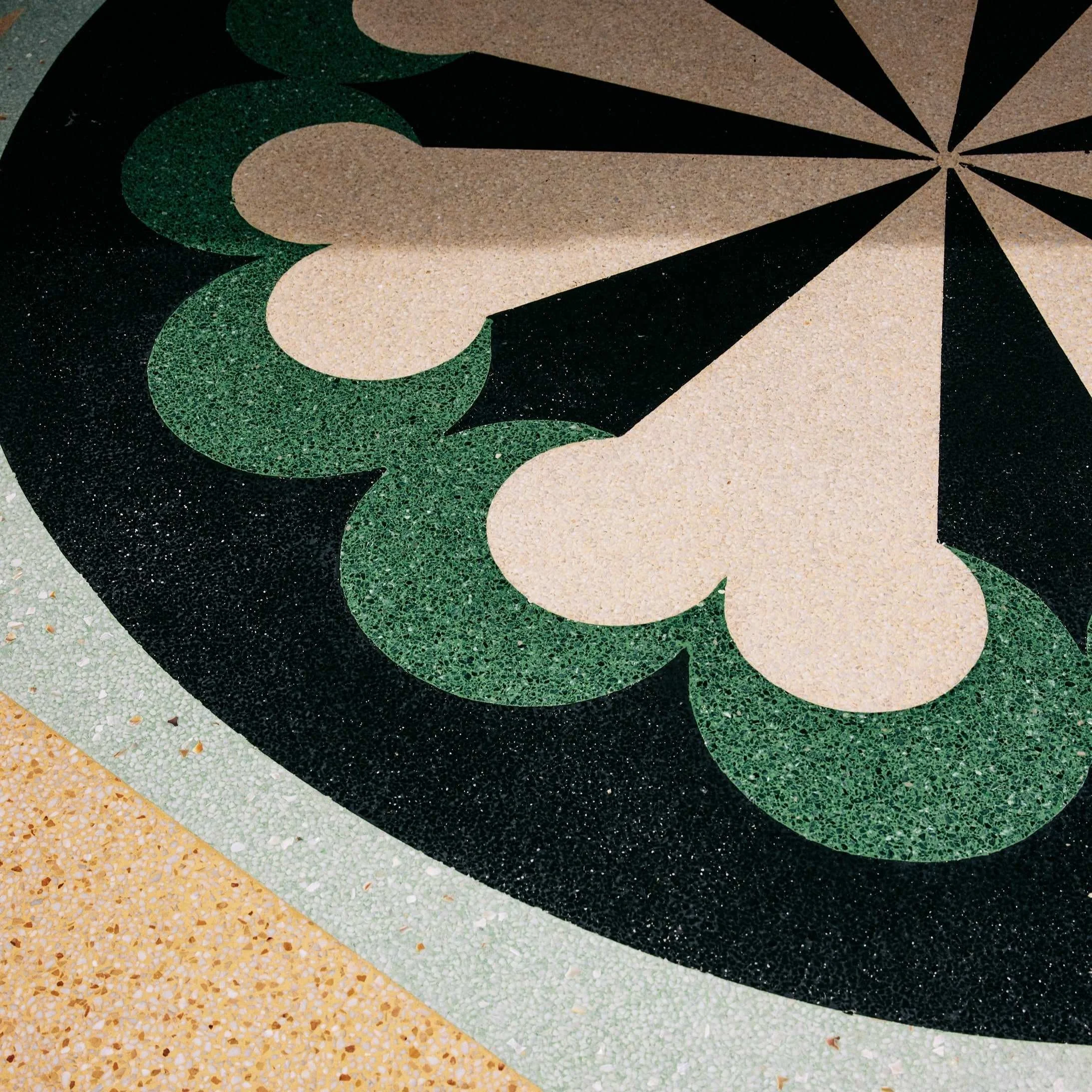
If you've got terrazzo in your home or on a project, whether it's a heritage floor that's been neglected for decades, a benchtop that's seen better days, or a piece of furniture that's been chipped or stained, the first question most people ask is the same: can this actually be fixed? The short answer is yes. In most cases, terrazzo can be repaired, restored, and brought back. But the process, the outcome, and whether it's worth doing all depend on the type of damage, the age of the terrazzo, and who's doing the work. This guide walks through all of it.
Why Terrazzo Is Worth Restoring
Before getting into the how, it's worth understanding the why because terrazzo restoration is one of the most underappreciated things you can do to a home or commercial space. Terrazzo is one of the most durable materials ever used in building and construction. If installed correctly, it can last centuries - there are terrazzo floors in Venice that have been walked on for over 500 years and are still in excellent condition. The terrazzo in Australian homes and buildings from the 1950s, 60s and 70s was built to last just as long. When it looks worn, dull, or damaged, the material itself is rarely the problem. What you're seeing is the surface, and surface issues are exactly what restoration addresses. Replacing old terrazzo floors is expensive and may not be necessary, and for heritage properties, it can often be a mistake that can't be undone. Restoring terrazzo preserves something genuinely valuable, often at a fraction of the replacement cost, and with a result that new materials simply can't replicate.
What Types of Terrazzo Damage Can Be Repaired?
Most terrazzo issues fall into a few categories, and nearly all of them are treatable.
Dullness and loss of polish: This is the most common issue and the easiest to address. Over time, foot traffic, cleaning products, and general wear cause the surface to lose its sheen. The terrazzo itself is fine; it just needs to be mechanically ground back and repolished.
Scratches and surface marks: Light to moderate scratches can be ground out as part of the polishing process. Deeper scratches may require additional steps, but they're rarely beyond repair.
Chips and cracks: Small chips and hairline cracks can be filled with a colour-matched epoxy or a terrazzo mix that's blended to match the existing aggregate and matrix. Done well, repairs are virtually invisible. Larger structural cracks, particularly in in-situ floors, need more careful assessment, as they can sometimes indicate underlying movement. This isn't a reason to write off the floor; it's a reason to get it properly inspected before proceeding.
Staining: Terrazzo is porous without a sealer, and years of exposure to oils, coffee, cleaning chemicals, or moisture can leave staining. How treatable this is depends on the depth of the stain. Surface staining typically comes out with the grinding and polishing process. Deep or long-standing stains may require additional treatment, but most are addressable.
Pitting: Pitting is small holes or voids in the surface and can occur in older terrazzo where the original mix had air pockets, or where acid-based cleaners have eroded the matrix over time. Pits can be filled and polished back, though extensive pitting may require a more involved approach.
Grout deterioration: Traditional in-situ terrazzo uses brass, aluminium, or zinc divider strips to separate colour fields. The grout or filler between strips can deteriorate over time. This is repairable as part of a comprehensive restoration.
What the Restoration Process Looks Like
Every restoration starts with an assessment. Before anything is agreed or quoted, the terrazzo needs to be looked at properly - the type of material, the extent of the damage, and what's underneath all inform the approach.
Once that's done, restoration typically follows this sequence:
Grinding: Diamond grinding pads mechanically remove the top layer of the terrazzo surface, taking out scratches, stains, and the dull upper layer to reveal fresh material beneath. The coarseness of the grind depends on the condition of the surface.
Crack and chip repair: Any structural repairs, filling of chips, or crack treatment happens after the initial grind, when the full picture of what's there is clearer.
Honing: Progressively finer grinding pads smooth the surface in stages, preparing it for polish.
Polishing: The final passes bring up the sheen, working through increasingly fine grits until the surface reaches the desired finish: matte, satin, or high gloss.
Sealing: A penetrating sealer is applied to protect the restored surface and reduce porosity. This is particularly important for floors and benchtops that will see regular use.
The whole process is labour-intensive and requires the right equipment and experience. Done properly, the result is a surface that not only looks exceptional but is better protected than it was before.
Heritage Terrazzo
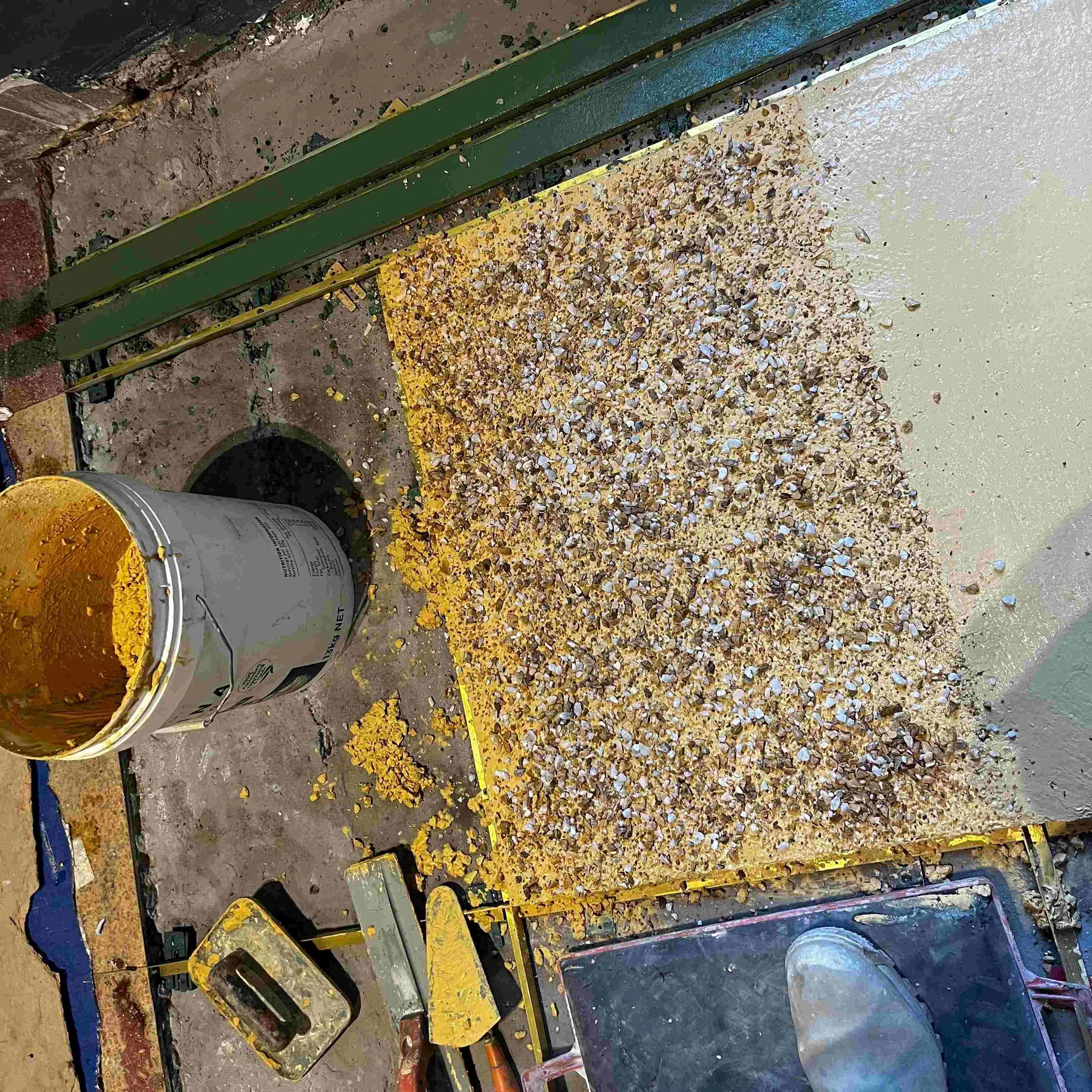
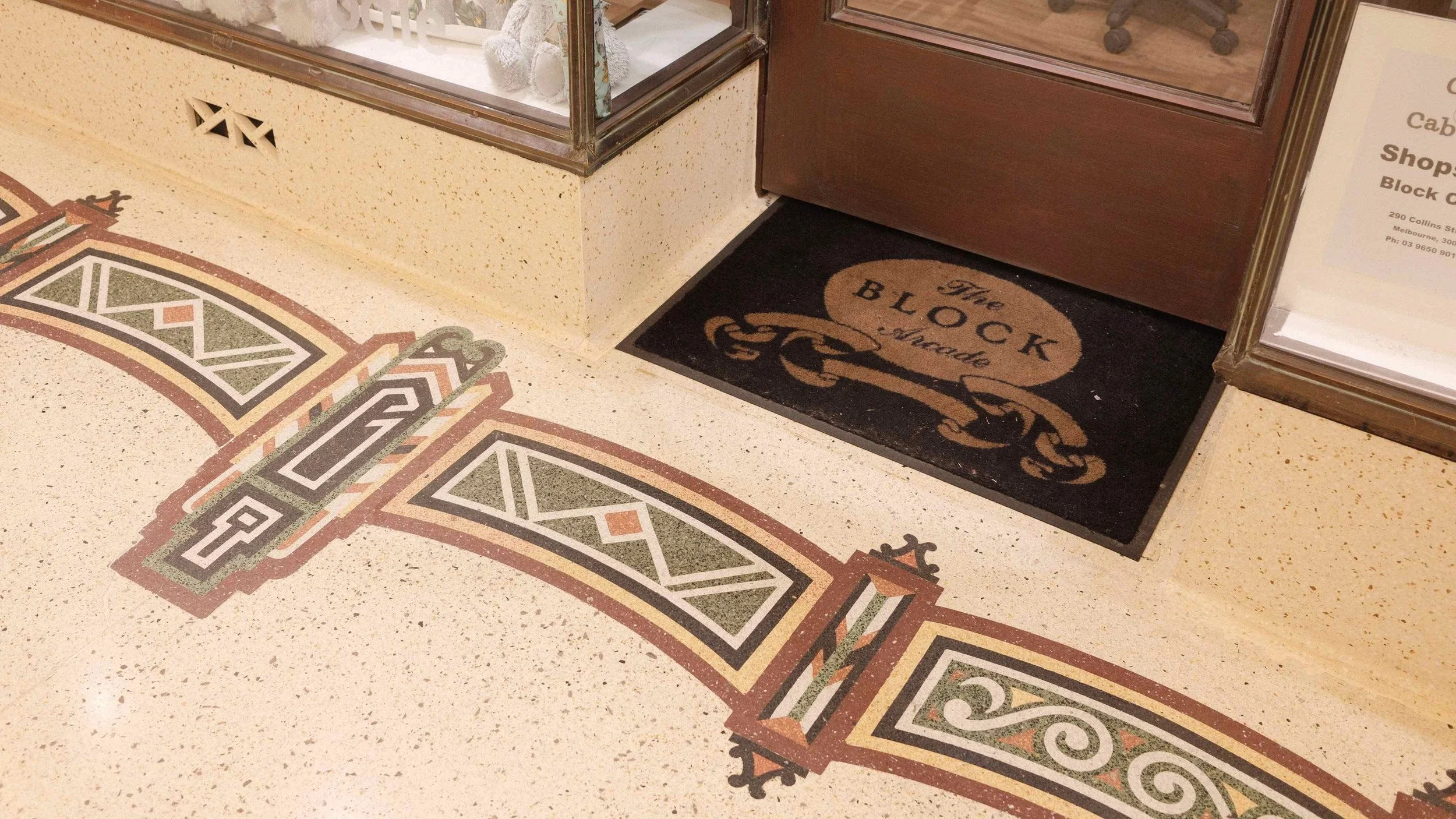
If you have terrazzo in a home or building from the mid-twentieth century, there's a good chance it's something genuinely worth preserving. The aggregate mixes used in that era, marble chips, granite, and glass, were often sourced from suppliers that no longer exist, producing colours and textures that can't be exactly replicated today.
Restoring heritage terrazzo isn't just about aesthetics. It's about keeping something irreplaceable. Australian homes from the 1950s through to the 1970s, in particular, often have terrazzo floors throughout the living areas, bathrooms, and external spaces that are in better structural condition than they appear. Years of lino glued over the top, or multiple layers of paint, don’t mean the terrazzo beneath is gone; in most cases, it's perfectly intact and waiting. If you're renovating a period home and you've found terrazzo under another floor covering, it's worth having it assessed before you decide to remove it. More often than not, what you've got is better than what you'd replace it with.
At Mortadello, we have previously worked with architects to restore terrazzo in heritage-listed buildings. You can read about it here.
When Restoration Isn't the Right Answer
If a terrazzo floor has significant structural damage, wide, moving cracks caused by subsidence or significant building movement, addressing the surface without fixing the underlying cause is a temporary solution at best. The restoration work may still be possible, but the structural issue needs to be resolved first.
If the terrazzo has been so aggressively cleaned with acid-based products over many years that the matrix has been deeply eroded, the depth of material available to work with may be limited. This is assessable, and often there's still enough to restore well — but it does affect the approach.
And if terrazzo has been patched badly in the past using the wrong materials, those areas may need to be fully reworked rather than simply polished. Again, treatable, but it affects the scope and cost.
The only way to know for certain is to have the work properly assessed. Most restoration professionals can tell you fairly quickly what you're dealing with and what the realistic outcome is.
Terrazzo Restoration at Mortadello
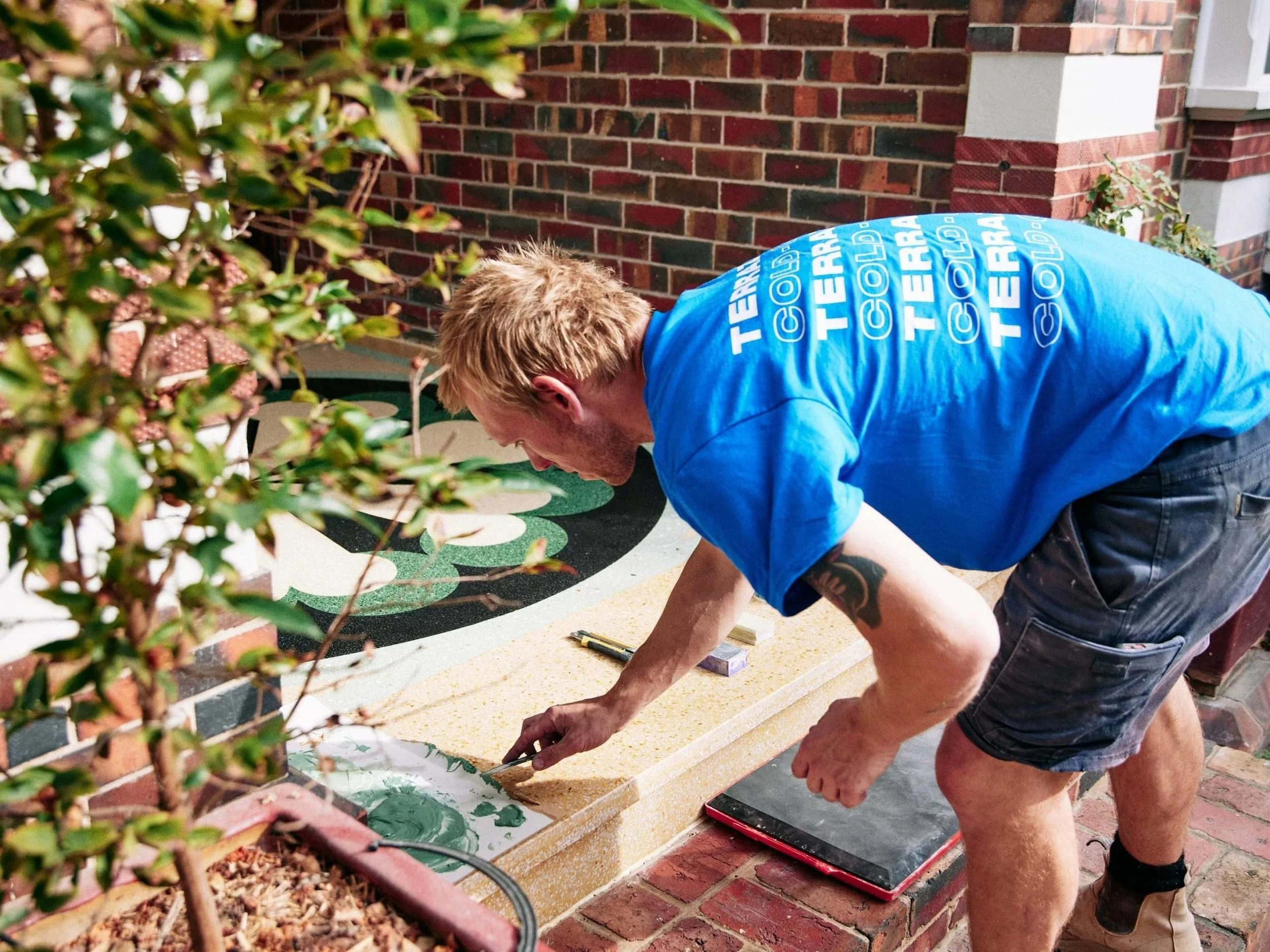
At Mortadello, we work on terrazzo restoration alongside our bespoke fabrication, and the two sides of the business inform each other. Because we make terrazzo from scratch, we understand the material at a level that most restorers don't. We know how mixes behave, how different aggregates respond to grinding and polishing, and how to approach repairs in a way that respects what's already there.
We work on residential restoration projects, heritage floors, worn benchtops, damaged furniture, and commercial restorations for hospitality and retail spaces. If you've got terrazzo that's seen better days, whether it's something we made or something that's been there for fifty years, we'd love to take a look.
Get in touch to discuss your restoration project.
Frequently Asked Questions
Can cracked terrazzo be repaired? In most cases, yes. Small to moderate cracks can be filled with colour-matched material and polished back. Larger structural cracks need an assessment first to understand what's causing them.
How much does terrazzo restoration cost in Melbourne? Restoration costs vary significantly depending on the size of the area, the condition of the terrazzo, and the complexity of the repairs needed. A small residential floor and a large commercial space are very different projects. The best way to get an accurate figure is to have the work assessed in person. Contact us, and we can discuss your project.
Is it worth restoring old terrazzo floors? Almost always, yes. Terrazzo is one of the most durable materials ever used in construction, and most worn or damaged terrazzo is in far better condition than it looks. Restoration typically costs significantly less than replacement, and the result, particularly with heritage terrazzo, is something that new materials can't match.
How long does terrazzo restoration take? This depends entirely on the scope of the project. A single benchtop repair might take a day. A full floor restoration in a large home could take several days. We'll always give you a clear timeline before work begins.
Can terrazzo furniture be restored as well as floors? Yes. We restore terrazzo furniture — tables, stools, benchtops — as well as floors and wall surfaces. The process is adapted to the piece, but the principles are the same: assess, repair, grind, polish, seal.
What should I do if I find terrazzo under my existing floor? Don't remove it until you've had it assessed. Terrazzo under lino, carpet, or other floor coverings is often in excellent condition and very much worth restoring. Contact us, and we can advise on what you've got and what the options are.
Mortadello Terrazzo is a Melbourne-based studio specialising in bespoke terrazzo furniture, surfaces, and restoration. We work across residential and commercial projects throughout Australia. Contact us to discuss your restoration project.